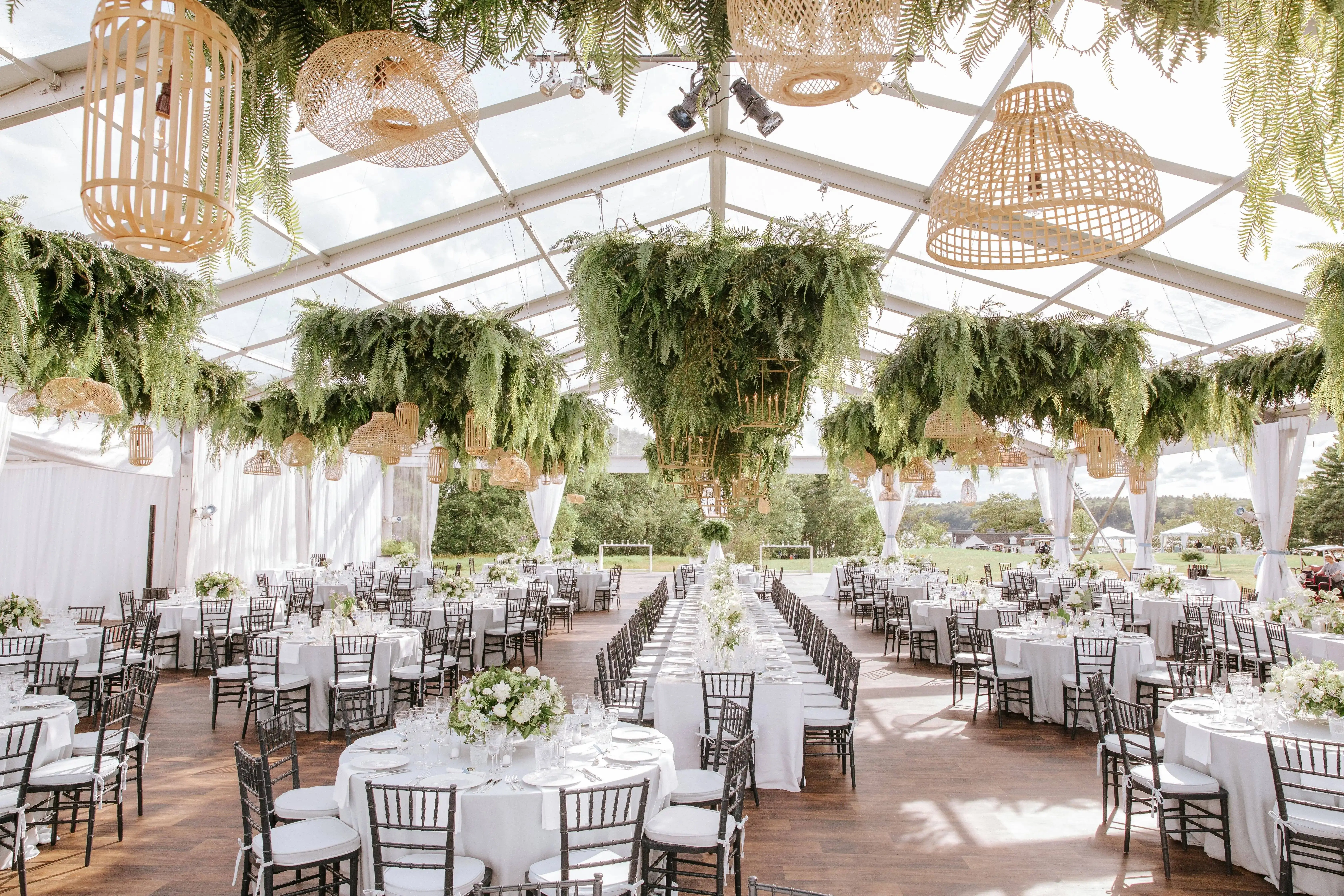
For high-end weddings, corporate galas, and private celebrations, selecting the ideal temporary structure depends entirely on your venue, aesthetic goals, and environmental needs. For romantic, lawn-based celebrations, choose signature Sperry sailcloth tents to elevate the landscape with sweeping peaks and natural wood support poles. For modern corporate events or urban spaces requiring solid anchoring on concrete or asphalt, choose a Losberger clearspan structure or a robust West Coast frame tent. For starlit evening events, select custom clear top tents that showcase the natural canopy of your venue while protecting your guests from unpredictable weather. This guide breaks down the core designs to match your precise guest count, structural terrain, and design vision.
Key Takeaways for Event Tent Selection
- Material selection dictates the interior atmosphere, with sailcloth providing organic warmth and clear vinyl maximizing outdoor views.
- Structural engineering varies significantly; clearspan designs offer unobstructed interiors, while pole tents rely on center supports.
- Site anchoring requirements differ, meaning concrete surfaces require heavy ballast systems while grass lawns allow for direct staking.
- HVAC planning is essential, as clear-top structures require extensive cooling in direct sunlight due to the greenhouse effect.
Exploring the Names of Tents and Event Tent Designs
Understanding the vocabulary of temporary event architecture is the first step toward planning a successful outdoor gathering. Industry professionals categorize tents based on their load-bearing engineering, framing materials, and overall aesthetic profile. The most common structural names of tents include tension tents, frame tents, and clearspan structures. Each of these options serves a distinct functional purpose and alters the guest experience inside the space.
Tension tents rely on the precise balance of fabric tension, outer guy wires, and tall center poles to maintain structural integrity. These traditional designs create dramatic peaks that draw the eye upward, making them highly desirable for formal weddings. However, they require staking directly into the ground and cannot be erected on solid rock or pavement without specialized anchoring. The fabric must be tightly secured to withstand wind loads, which requires professional crew calibration during installation.
Frame tents utilize a self-supporting skeletal framework of aluminum or steel pipes to hold the vinyl canopy aloft. This clever design eliminates the need for center poles, leaving the interior space completely open and unobstructed. You can install frame structures on almost any surface, including patios, driveways, and rooftops. Because they do not rely on tension to stay upright, they offer incredible flexibility for tight spaces and urban environments.
Comparing Different Types of Tents for Scale and Performance
Selecting the right tent requires balancing artistic vision with structural capability. Large-scale corporate functions and sprawling wedding receptions have vastly different engineering demands than small backyard cocktail parties. To ensure your temporary venue performs flawlessly under pressure, you must evaluate the terrain, square footage requirements, and potential wind exposure of the site.
According to wind stability studies conducted by the Insurance Institute for Business & Home Safety, structural failures in temporary shelters usually stem from improper anchoring or choosing a tent style unsuited for the local terrain. If your venue sits on an exposed bluff overlooking the ocean, a highly engineered clearspan structure with high wind-load ratings is far safer than a lightweight pop-up canopy. Conversely, a protected woodland clearing is the perfect setting for a beautiful, breathable sailcloth tent.
| Tent Style | Optimal Ground Surface | Key Structural Benefit | Average Rental Price Range |
|---|---|---|---|
| Sperry Sailcloth Tents | Lawn, Grass, Even Dirt | Breathtaking peaks, organic wood poles | $8,000 – $35,000+ |
| Clearspan Structures | Any surface (Concrete, Asphalt, Grass) | No interior poles, maximum wind resistance | $15,000 – $100,000+ |
| Clear Top Frame Tents | Decks, Patios, Pavement, Grass | Starlit ceiling views, modern aesthetic | $5,000 – $25,000+ |
| Traditional Pole Tents | Spacious grass fields | Cost-effective scale, classic styling | $3,000 – $15,000+ |
The Nuances of Elegant Event Tent Design
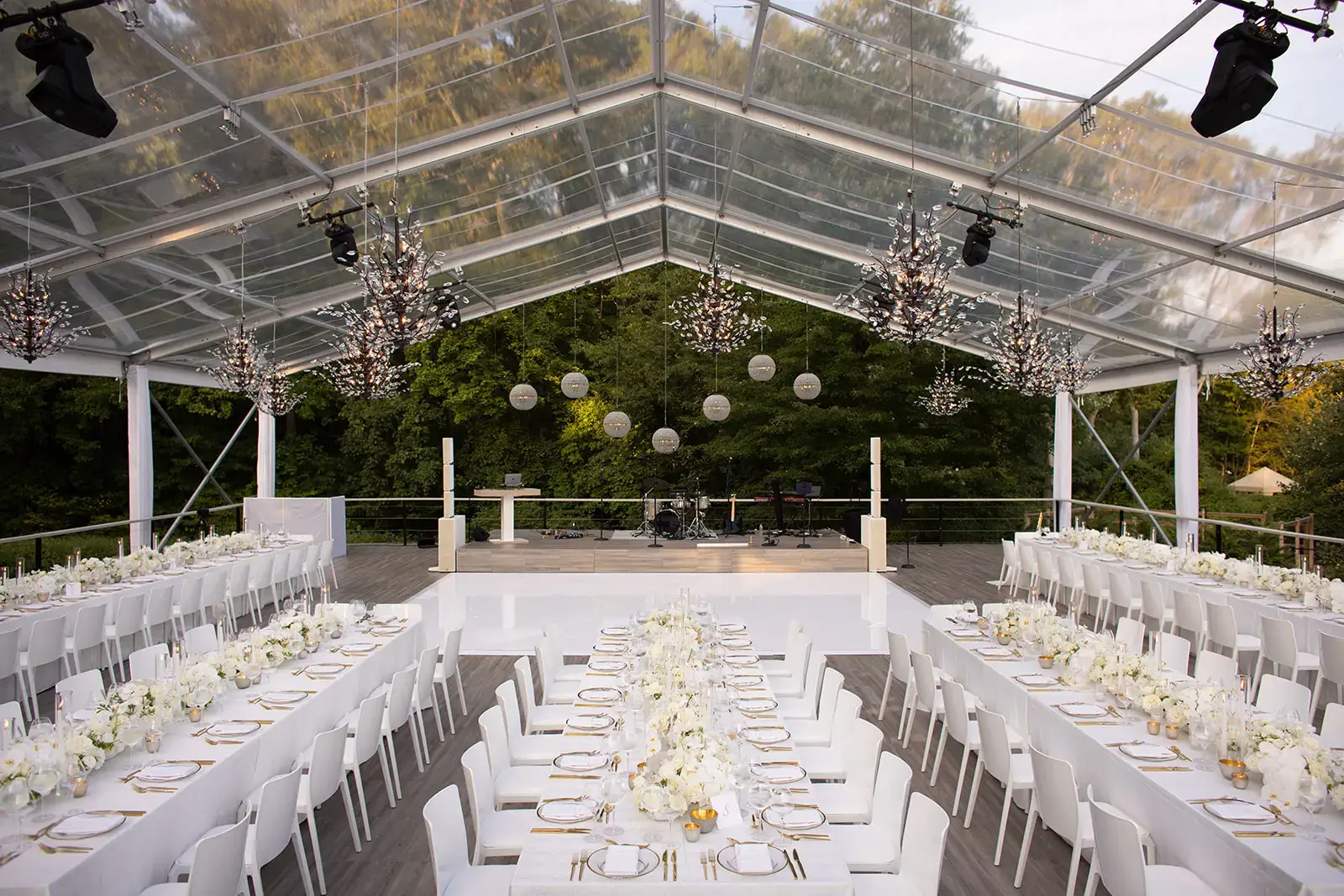
Designing a luxury temporary venue involves much more than simply erecting a vinyl roof over a grassy field. The magic of high-end event tent design lies in the integration of flooring, lighting, custom drapery, and climate control. Achieving a seamless transitions from the outdoors to an interior oasis requires careful spatial planning and an understanding of guest flow.
Professional event planners use the standard industry guideline of allocating 15 to 20 square feet per guest for seated dining events. This spacing ensures comfortable pathways for service staff and prevents the dining room from feeling cramped. If your event includes a live band and a large dance floor, you must increase this allocation to accommodate the stage footprint and dancing space. Incorporating leveled floors is also critical when working on uneven lawns, as it prevents wobbly tables and tripping hazards.
Lighting is another transformative element in tent design. Because clear-top and white-vinyl canopies act as massive diffusers, you can project uplighting, wash lights, and pattern gobos onto the canvas to create stunning visual depth. Hanging heavy chandeliers or installations of fresh greenery requires a tent frame with engineered load points, which is a standard feature on clearspan and heavy-duty frame tents but not on basic lightweight structures.
The Definitive Guide to 12 Distinct Types of Tents
To help you navigate the vast marketplace of temporary event venues, we have compiled the definitive guide to 25 essential tent styles. Each of these structures features distinct engineering properties, aesthetic profiles, and ideal use cases.
- Sperry Sailcloth Tents Crafted from genuine sailcloth and supported by hand-carved wooden center poles, these structures are the gold standard for luxury weddings. The breathable fabric allows natural light to filter through by day and glows warmly from within by night. Their soft, flowing lines integrate beautifully into coastal estates and historic lawns.
- Clear Top Tents Featuring transparent vinyl roof panels, these structures offer an unobstructed view of the surrounding trees, sky, and stars. They are highly sought after for evening receptions and autumn gatherings where natural light is prized. However, they must be managed carefully in summer to avoid trapping solar heat.
- Losberger Clearspan Structures Engineered to the highest standards, these German-designed structures feature heavy-duty aluminum box frames and track-fed vinyl. They do not require interior support poles or exterior guy wires, providing maximum usable square footage. They are highly wind-resistant and can remain installed for months at a time.
- Traditional Tension Pole Tents These tents rely on tall center poles and high-tension perimeter stakes to support their soaring peaks. They are a classic choice for large-scale summer festivals and backyard graduations. They offer excellent vertical space and a traditional, festive silhouette on expansive grass lawns.
- Keder Track Frame Tents These upgraded frame tents feature a specialized track system where the vinyl panels slide directly into the aluminum rafters. This design creates a watertight seal and prevents the fabric from flapping loudly in high winds. They are ideal for areas prone to sudden coastal storms.
- Conservatory Glass-Wall Tents By replacing vinyl sidewalls with floor-to-ceiling glass panels, conservatory tents create a truly luxurious, permanent-feeling venue. They offer panoramic views of manicured gardens or scenic waterfronts while providing absolute protection from wind and rain. They are frequently paired with custom climate control systems.
- Heated Tents These specialized winter setups utilize indirect-fired heaters placed outside the tent structure, ducted quietly under the sidewalls. The warm air circulates evenly throughout the space without creating noisy drafts or hot spots. They allow hosts to execute stunning winter wonderland weddings in absolute comfort.
- Air-Conditioned Tents For mid-summer celebrations, heavy-duty commercial air conditioning units are paired with sealed tent structures. The system keeps the interior cool, dry, and free of humidity, protecting delicate floral arrangements and wedding cakes from melting. They require solid sidewalls and sealed doors to maintain a consistent climate..
- Pool Truss Supported Tents This specialized installation style involves building a heavy-duty platform over an existing swimming pool, which is then covered by an elegant tent. It allows homeowners to utilize limited backyard space for large gatherings. The resulting layout creates a dramatic, floating-on-water experience for guests.
- Heavy-Duty Industrial Tents Built for long-term commercial use, these structures feature ultra-thick vinyl and reinforced steel framing. They are designed to withstand high snow loads and continuous wind exposure, making them perfect for temporary warehousing, manufacturing expansion, or seasonal retail space.
- Emergency Medical Tents Engineered for rapid deployment and absolute reliability, emergency tents serve as mobile testing sites, triage centers, or disaster relief shelters. They feature heavy-duty, easy-to-sanitize vinyl surfaces and can be equipped with negative pressure HEPA filtration systems to ensure patient safety.
- Stage & Bandstand Cover Tents Specifically engineered to cover performance stages, these structures feature high-clearance front arches and heavy-duty load points for audio-visual equipment. They protect expensive sound gear and performers from rain and direct sun, ensuring the show goes on regardless of weather conditions.
Common Pitfalls in Tent Selection and Installation
The most common mistake made by amateur planners is placing clear-top tents in direct, unshaded sunlight during mid-summer afternoons. The clear vinyl acts exactly like a greenhouse, trapping solar radiation and rapidly raising interior temperatures to over 100 degrees Fahrenheit. If you must use a clear-top tent in July or August, schedule your event after sunset or budget for massive commercial cooling units to keep your guests comfortable.
Another frequent oversight is failing to conduct a thorough underground utility assessment before driving stakes. Water lines, gas pipes, and high-voltage electrical conduits often run just beneath the surface of pristine manicured lawns. Driving a three-foot steel stake into a hidden utility line can cause catastrophic damage, costly repairs, and severe safety hazards. Always contact local utility marking services well in advance of the installation crew’s arrival.
Finally, many hosts underestimate the space required for support systems behind the scenes. A luxury event tent needs quiet areas for catering kitchens, generator placement, restrooms, and crew staging. Failing to allocate tent space for these essential services can result in caterers working in the rain or noisy generators being placed too close to the dining tables. Incorporating dedicated service tents into your master plan ensures a smooth, professional production.
FAQ
What is the difference between a pole tent and a frame tent?
A pole tent relies on high-tension fabric, perimeter stakes, and tall center poles to stay upright, making it ideal for grass installations. A frame tent uses a self-supporting aluminum skeletal structure with no center poles, allowing it to be installed on any surface, including concrete.
How do you anchor a tent on concrete or asphalt?
Anchoring a tent on hard surfaces requires heavy ballast systems, such as engineered concrete blocks or water weights, to counteract wind forces. In some cases, professional crews can drill temporary anchors directly into the pavement and repair the holes after the event.
Which tent style is best for high wind conditions?
Losberger clearspan structures are the most wind-resistant temporary venues on the market, engineered to withstand continuous wind loads of up to 70 miles per hour or more. Their rigid aluminum frames and track-secured vinyl provide far greater stability than traditional tension or pop-up designs.
When do I need to permit my event tent?
Most local municipalities require a building and fire safety permit for any temporary structure exceeding 400 square feet. You should check with your local building department at least 60 days before your event to submit structural drawings, flame certificates, and site plans.
Can clear top tents be used in hot summer weather?
Clear top tents are not recommended for direct midday sun in mid-summer because they trap heat like a greenhouse. If you choose a clear top for a summer event, it is best to host the gathering after sunset or invest heavily in high-capacity commercial air conditioning.
Is it necessary to install flooring inside an event tent?
While not strictly mandatory for casual events, installing a solid wooden floor is highly recommended for high-end gatherings to protect guests from damp soil and uneven grass. A level subfloor ensures that dining tables remain stable, ladies’ high heels do not sink into the turf, and dancing remains safe.