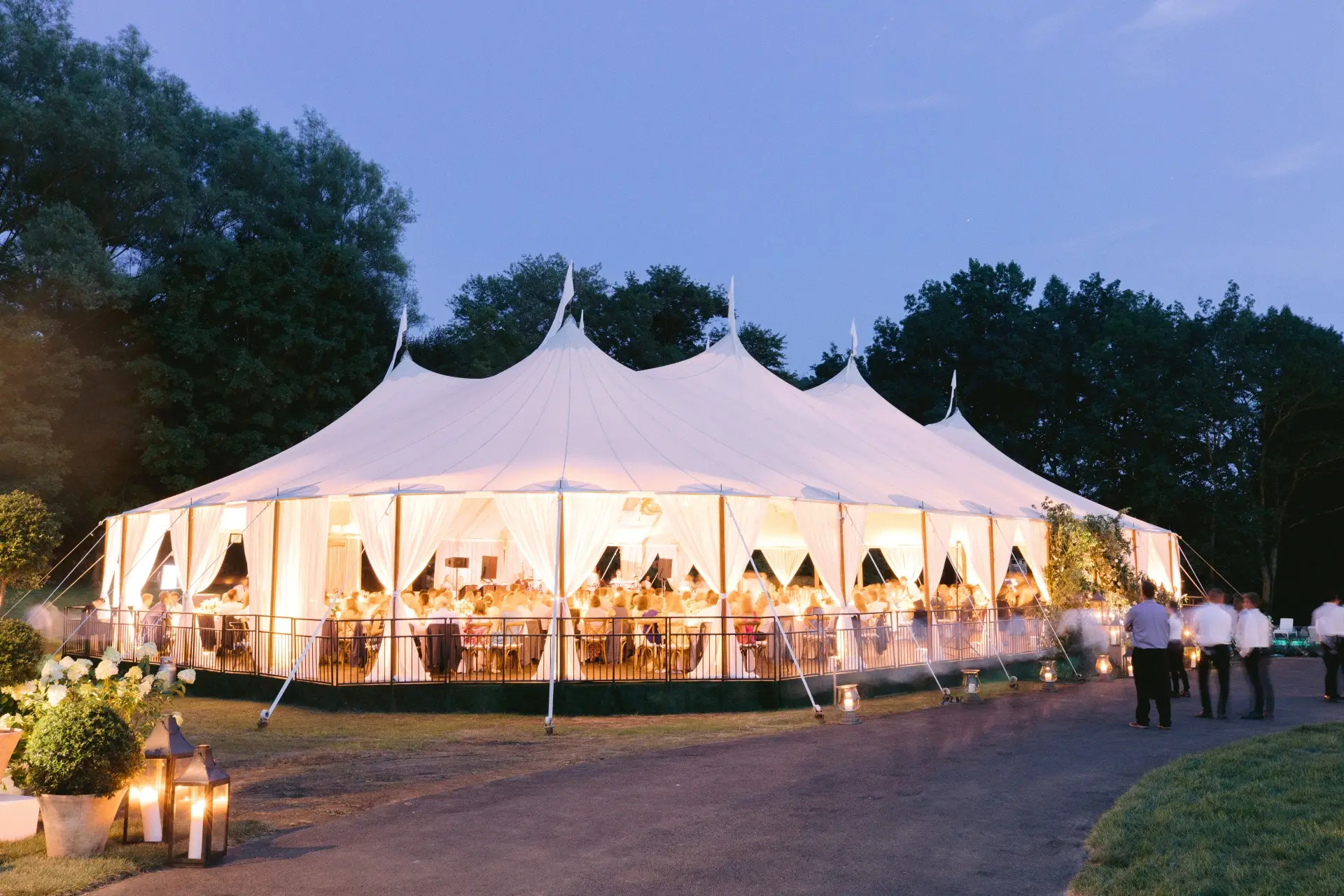
For an event accommodating 200 guests, determining the precise tent size requires a careful assessment of the event’s style, desired layout, and included amenities. For a formal seated dinner with a head table and dedicated dance floor, a tent providing approximately 20 square feet per guest is recommended, leading to a total footprint of around 4,000 square feet. This often translates to dimensions such as a 40×100 foot or a 60×70 foot tent, allowing ample room for round tables (seating 8-10 people), a generous dance area, and space for catering stations or a bar. Should the event be a more casual cocktail reception where guests primarily stand and mingle, a smaller footprint of 10-12 square feet per person, equating to 2,000-2,400 square feet, may suffice. However, for a wedding, the expectation for comfort and flow typically necessitates more generous spacing, often leaning towards the higher end of the per-person square footage, even for cocktail-style events. Similarly, for 150 guests, a seated dinner with a dance floor would typically require 3,000 square feet (e.g., a 40×75 foot tent), while for 100 guests, approximately 2,000 square feet (e.g., a 30×70 or 40×50 foot tent) would be appropriate. Ultimately, the best approach involves consulting with a seasoned tent rental professional who can factor in every nuance of your occasion and venue.
Standard Tent Size: Key Takeaways
- Tent size is not solely about guest count; the event layout, activities planned, and additional amenities like dance floors, stages, and catering areas significantly impact spatial requirements.
- A comfortable seated dinner for 200 guests typically needs 20 square feet per person, totaling 4,000 square feet, while a cocktail reception can be accommodated with 10-12 square feet per person.
- Always engage with a professional tent rental company; their expertise is invaluable for site assessment, layout planning, and recommending the optimal tent size and style.
- Consider the tent type carefully: frame tents offer clear, unobstructed interiors, while elegant pole tents feature interior poles that must be incorporated into your layout.
- Budget for essential accessories such as flooring, lighting, and climate control, as these enhance guest comfort, elevate the event’s aesthetic, and often require additional tent footprint considerations.
Calculating Your Event Tent Needs: Beyond the Guest Count
Determining the appropriate tent size for 200 guests extends far beyond merely multiplying the guest count by a standard square footage. The true requirement is a function of how guests will interact with the space, what activities will occur, and which ancillary services will be present. For a seated dinner, the industry guideline suggests between 15 and 20 square feet per person. Opting for the higher end, 20 square feet per guest, ensures generous spacing for tables, chairs, and comfortable circulation, leading to a 4,000 square foot minimum for 200 guests. This figure allows for the inclusion of 60-inch round tables, each comfortably seating 8-10 individuals, along with the necessary aisles for service staff and guest movement.
When planning for a wedding tent rental or a lively celebration for 200 people, it is critical to allocate additional space for elements such as a dance floor, stage for entertainment, a bar, or buffet stations. A standard 16×20 foot dance floor, suitable for about 50-60 dancers at any given time, adds 320 square feet to the total. Similarly, a band stage might require another 100-200 square feet, depending on the number of musicians and equipment. Catering prep areas, coat checks, or photo booths further expand the necessary footprint. A common professional mistake is underestimating the space required for these crucial components, which can lead to cramped conditions and hinder the flow of the event. According to a recent survey by BizBash, nearly 40% of event planners cite insufficient space as a primary concern post-event, highlighting the importance of meticulous planning.
For more intimate gatherings or specific areas within a larger tent, such as a lounge, the per-person square footage might shift. For instance, a cocktail reception for 200 guests where mingling is paramount and formal seating is minimal could function within 10-12 square feet per person, totaling 2,000-2,400 square feet. This provides space for high-top tables and allows guests to move freely. For a ceremony with theater-style seating (chairs in rows), approximately 6-8 square feet per person is typically sufficient. However, it’s rare that an entire 200-guest event is solely a ceremony. Most comprehensive events for this number of guests will incorporate multiple zones and activities, necessitating a larger overall tent rental. Our sales team offers expert tent planning tips to ensure all these elements are accounted for.
Selecting the Right Tent Style for Your Connecticut Celebration

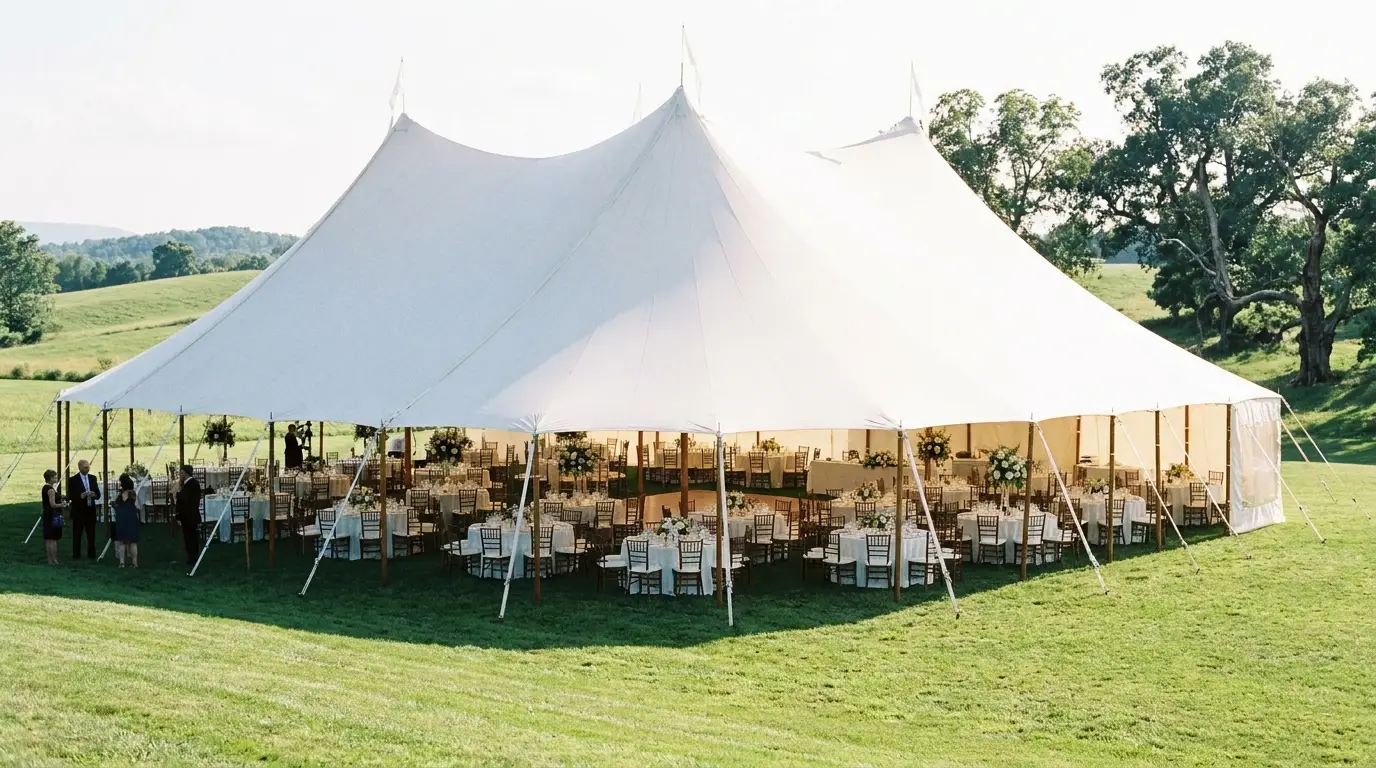
The aesthetic and functional success of your 200-guest event in Connecticut is significantly influenced by the style of tent you choose. Each tent type offers distinct advantages, impacting interior layout, weather protection, and overall ambiance. For clients seeking an elegant, classic look, a Sperry Tent is an exceptional choice. Known for their graceful peaks and translucent sailcloth fabric, Sperry Tents create a warm, inviting glow, especially as dusk settles. These are pole tents, meaning they feature internal support poles that must be integrated into your layout design. For a 200-person seated dinner, a Sperry Tent might require a larger footprint, such as a 50×110 foot or 60×90 foot, to accommodate the poles while maintaining comfortable guest spacing and activity areas.
Alternatively, for those prioritizing an unobstructed interior and maximum layout flexibility, a frame tent or a Losberger Clearspan structure offers unparalleled versatility. Frame tents feature a rigid aluminum framework that supports the tent fabric without the need for central poles, leaving the entire interior floor space free for customization. This makes them ideal for intricate seating arrangements, large stages, or extensive dance floors. Clearspan structures, like those from Losberger, are robust, engineered solutions perfect for large-scale events, offering superior wind resistance and the ability to be climate-controlled more effectively. A 40×100 foot clearspan structure for 200 guests provides a vast, open canvas for design. For a more immersive experience, a clear top frame tent allows guests to dine and dance under the stars or enjoy natural daylight, blending the interior with the surrounding landscape while maintaining the benefits of a pole-free design.
Consider also the site conditions in Bridgeport, Fairfield, Ridgefield, Darien, or Greenwich. Pole tents require soft ground for staking, whereas frame tents and clearspan structures can be installed on various surfaces, including grass, asphalt, or concrete, using weighted ballast systems if staking is not feasible or permitted. The choice of tent style directly impacts not only the aesthetic but also practical considerations like installation time, specific site requirements, and overall cost. Professionals at Greenwich Tent Company often conduct site visits to recommend the most suitable tent type based on the landscape, existing structures, and your event’s vision.
| Tent Type | Best For (Event Style) | Interior Obstructions | Aesthetic | Typical Capacity (200 Guests Seated) |
|---|---|---|---|---|
| Sperry Sailcloth Tent | Elegant Weddings, Upscale Gatherings | Interior support poles | Classic, luxurious, glowing translucence | 50×110 ft (approx. 5,500 sq ft) |
| Frame Tent | Versatile Events, Corporate, Private Parties | None | Clean, customizable, modern | 40×100 ft (approx. 4,000 sq ft) |
| Clear Top Frame Tent | Unique Views, Evening Events, Daytime Light | None | Modern, immersive, indoor-outdoor feel | 40×100 ft (approx. 4,000 sq ft) |
| Losberger Clearspan Structure | Large-Scale Events, Industrial, Long-Term Setups | None | Robust, contemporary, engineered precision | 40×100 ft (approx. 4,000 sq ft) |
Essential Accessories and Layouts for a 200-Guest Event
Beyond the tent structure itself, the integration of essential accessories and a thoughtfully designed layout are paramount for ensuring comfort and functionality for 200 guests. Event flooring is often a non-negotiable component, particularly for formal events or uneven terrain. Full leveled flooring not only creates a stable, comfortable surface but also protects guests from damp ground or muddy conditions. Hardwood flooring, for instance, transforms the tent interior into an elegant ballroom, while turf or carpeted options can create a more casual or garden-like atmosphere. The cost of flooring for a 4,000 square foot tent can range from $2-$8 per square foot, depending on the material and leveling requirements.
Event lighting is another critical element, defining the mood and ensuring visibility throughout the event. Options range from functional perimeter lighting to decorative chandeliers, bistro lights, or uplighting. For a 200-guest event, a combination of these elements is often employed to create distinct zones and highlight focal points. For example, elegant chandeliers might adorn the main dining area, while string lights could outline the dance floor. A comprehensive lighting package for a 200-person event might cost anywhere from $500 for basic ambient lighting to $5,000+ for elaborate, customizable setups.
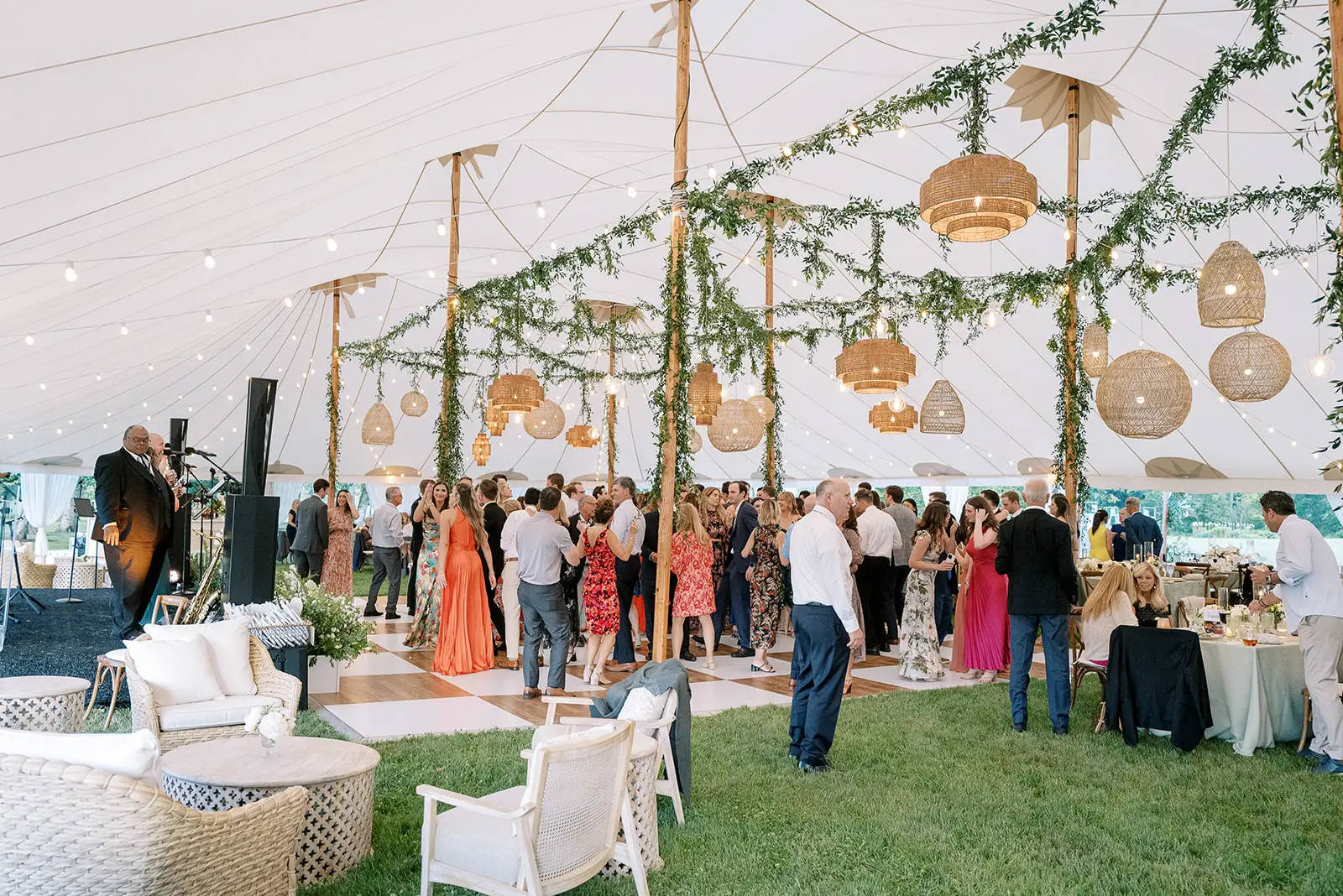
Climate control is vital for guest comfort, especially during peak summer or colder months. Portable air conditioning units can maintain a cool environment in the summer, while tent heaters ensure warmth during cooler seasons. These systems require specific power distribution and often discrete placement to blend seamlessly with the event design. The cost for heating or cooling a 4,000 square foot tent can typically range from $1,000 to $4,000, depending on the duration and specific equipment needed. Additionally, a dedicated dance floor is almost essential for a wedding or celebratory party for 200 guests. A common size is 20×20 feet, accommodating roughly 80-100 dancers, which translates to 400 square feet. This should be strategically placed to encourage participation without impeding traffic flow. Similarly, a band stage of at least 12×16 feet (192 sq ft) is typically required for a full band. According to event design specialists, a well-defined dance floor and stage area can increase guest interaction and satisfaction by as much as 30%.
- Seated Dinner Layout: For 200 guests with 60-inch round tables (seating 8-10 people), plan for 20-25 tables. Arrange these to allow clear pathways of at least 4-5 feet between tables and surrounding features.
- Head Table Placement: Position the head table or sweetheart table strategically to ensure optimal visibility for the wedding party and guests. This often serves as a focal point.
- Dance Floor & Stage: Integrate a centrally located dance floor (e.g., 20×20 ft) and an adjacent stage (e.g., 12×20 ft) for a band or DJ. Ensure adequate power distribution is routed to these areas without creating trip hazards.
- Bar & Catering Stations: Designate specific areas for the bar and buffet lines or catering stations, away from main walkways but easily accessible. Allow sufficient space for queues and service.
- Restroom & Exit Access: Always ensure clear, unobstructed paths to restrooms, emergency exits, and any exterior amenities.
Navigating Site Specifics and Permit Requirements
A successful tented event for 200 guests hinges significantly on a thorough understanding and careful navigation of the chosen site’s specifics and local permit requirements. Before any tent installation, a professional site visit is indispensable. This allows the tent company to assess critical factors such as ground topography—are there slopes or uneven areas that require a leveled flooring system? They will also identify potential obstacles like trees, permanent structures, or overhead power lines that might interfere with tent placement or height. Furthermore, understanding the ground type is crucial; soft ground allows for staking, essential for pole tents, while hard surfaces like asphalt or concrete necessitate specialized ballasting systems to secure frame and clearspan tents safely.
Access for installation and breakdown crews is another vital consideration. Large tents and associated equipment require significant space for delivery trucks and construction vehicles. Clear pathways for these vehicles ensure efficient setup and prevent damage to the property. Expert tent planners will also assess the availability and proximity of power and water sources, which are critical for lighting, climate control, and catering needs. A common professional oversight is failing to verify underground utilities before staking begins. Always request utility mark-outs to prevent costly damage and dangerous situations.
Local municipalities in areas like Bridgeport, Fairfield, Ridgefield, Darien, and Greenwich, CT, often have specific permit requirements for large tent installations, especially those exceeding certain size thresholds or intended for public gatherings. These permits are crucial for ensuring safety standards are met, including fire safety, exit pathways, and structural integrity. Permitting processes can involve inspections from fire marshals, building departments, and health officials. It is imperative to begin the permit application process well in advance, as lead times can vary from a few weeks to several months, depending on the jurisdiction and complexity of the event. Greenwich Tent Company, with its extensive experience in the region, is adept at guiding clients through these regulatory landscapes, ensuring all necessary approvals are secured for a compliant and safe event.
The Investment in an Exceptional Tented Event for 200 Guests
The financial investment for an exceptional tented event catering to 200 guests is a multifaceted calculation, reflecting not just the tent structure but also the comprehensive suite of services and accessories that transform a basic shelter into a magnificent venue. While base tent rental prices vary widely by size, style, and season, understanding the contributing factors helps in budget planning. For a standard frame tent of 4,000 square feet, suitable for a seated dinner for 200, rental costs might range from $4,000 to $10,000. An elegant Sperry Tent of comparable capacity could command $8,000 to $15,000, reflecting its premium aesthetics and specialized installation.
Beyond the tent itself, the costs escalate with essential enhancements. Full event flooring is a significant investment, often ranging from $2 to $8 per square foot, which means $8,000 to $32,000 for a 4,000 square foot area. This includes materials, installation, and leveling if needed. Lighting packages, ranging from elegant chandeliers to perimeter string lights and uplighting, can add another $1,000 to $5,000 or more, depending on the desired effect and complexity. Climate control, such as heating or air conditioning, is essential for guest comfort and typically incurs $1,500 to $4,500 per unit, with multiple units often required for a 200-guest tent. Additional amenities like glass walls, dance floors, stages, and power distribution further contribute to the total investment. For instance, a quality dance floor rental might add $800 to $2,500, and comprehensive power distribution could be $500 to $2,000.
Delivery, setup, and teardown fees are also integral components of the total cost, typically calculated based on tent size, site accessibility, and the crew size required. These services often represent 10-25% of the base tent rental cost. It is advisable to obtain a detailed, itemized quote from your tent rental provider to avoid unexpected expenses. While these figures represent a substantial investment, they contribute directly to the success and comfort of your event. Choosing a reputable company like Greenwich Tent Company ensures not only high-quality equipment but also professional installation and project management, which are invaluable for an event of this scale. Investing in quality ensures safety, elegance, and peace of mind for your memorable occasion.
FAQ
What is the ideal tent size for a wedding with 200 guests?
For a wedding with 200 guests planning a seated dinner, a dance floor, and possibly a stage or catering area, you should plan for approximately 20 square feet per person. This totals around 4,000 square feet, often achieved with a 40×100 foot or a 60×70 foot tent. The exact size can vary slightly based on the specific layout and additional features you wish to include.
How much space per person is needed for a tented event?
The space needed per person in a tent varies by event style. For a formal seated dinner, allocate 15-20 square feet per guest. For a cocktail reception with standing room and limited seating, 10-12 square feet per person is typically sufficient. Theater-style seating for a ceremony might only require 6-8 square feet per person.
Which tent type is best for a formal seated dinner?
For a formal seated dinner, both frame tents and Sperry Sailcloth tents are excellent choices. Frame tents offer a completely unobstructed interior, providing maximum flexibility for seating arrangements and a dance floor. Sperry Sailcloth tents provide a luxurious, classic aesthetic with elegant peaks, though they have interior poles that must be incorporated into the layout design.
Can a dance floor be added to any tent size?
Yes, a dance floor can generally be added to any tent size, provided there is adequate space within the chosen tent footprint. It is crucial to factor the dance floor’s dimensions into your overall tent size calculation to ensure comfortable guest circulation around it and to avoid a cramped environment. A common dance floor size for 200 guests is 20×20 feet.
What factors besides guest count affect tent size?
Beyond guest count, key factors influencing tent size include the event’s format (seated dinner, cocktail, ceremony), the inclusion of a dance floor, stage for entertainment, bar, buffet lines, catering prep areas, and the type of tables used (round versus rectangular). Site considerations such as obstacles and slopes also play a role in determining the usable tent area.
When should I book my tent rental for a large event?
For a large event like a 200-guest wedding or corporate gathering, it is highly recommended to book your tent rental as far in advance as possible, ideally 9-12 months out. Peak seasons, such as late spring and fall, see high demand, and booking early ensures availability of your preferred tent style and accessories. This also allows ample time for site visits and permit acquisition.